
Emergency Water Damage Restoration Temecula CA
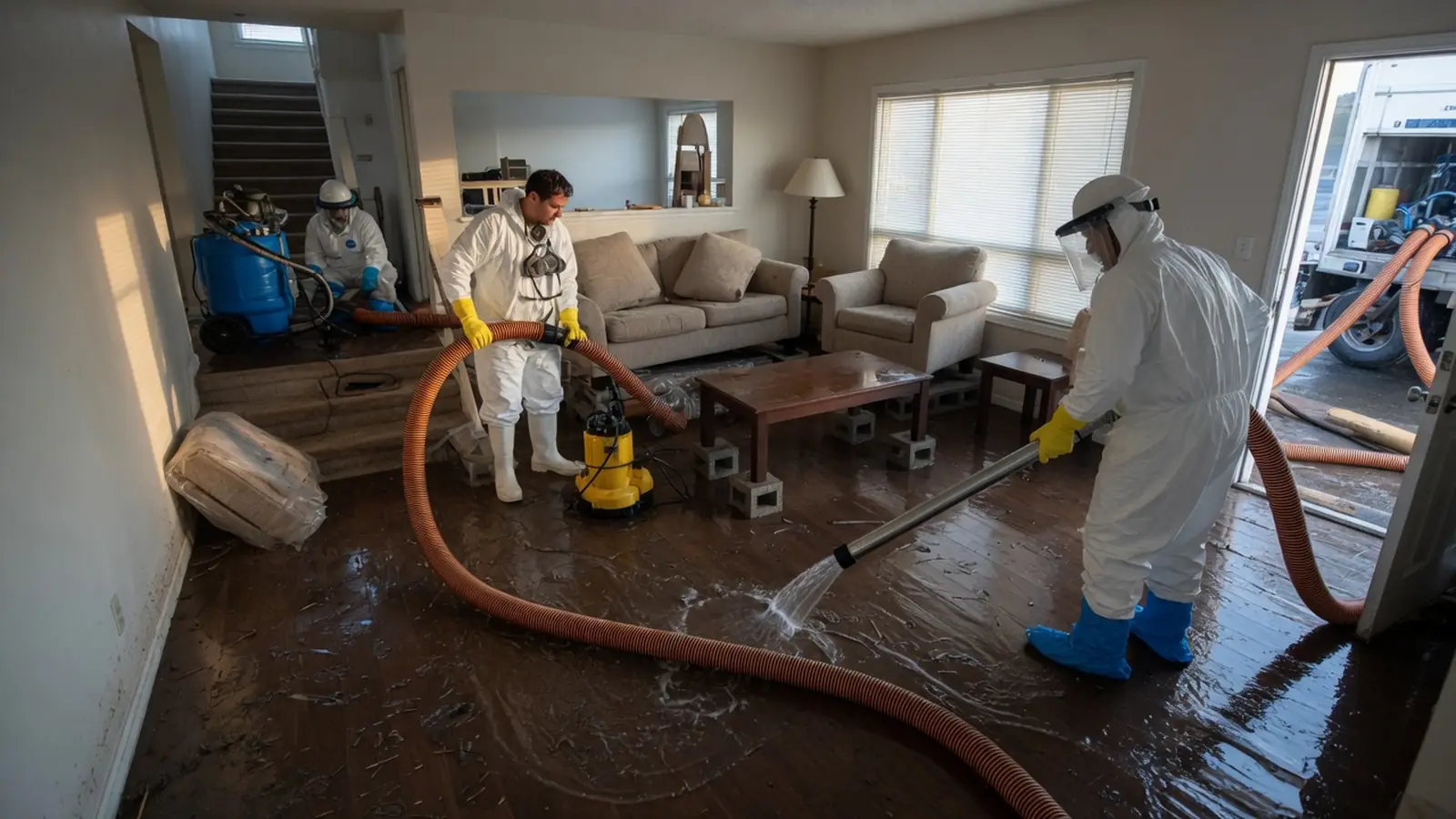
When water floods your home, microscopic mold spores begin germinating within 24 to 48 hours of water intrusion, making extraction within the first hour critical. Shutting down circuit breakers to wet zones immediately after main water shutoff is critical to prevent electrocution before extraction begins. Our rapid-response technicians arrive with commercial extractors and industrial dehumidifiers to stabilize your property immediately.
Water coming in right now? (951) 555-0125.
Prefer to talk? (951) 555-0125
Proven Regional Water Extraction & Structural Drying
Our technicians bring years of direct restoration experience across local communities facing seasonal flash runoff and aging plumbing lines.
About 26% of housing units in the valley (9,363 of 36,514) were built in the 1970s and 1980s, overlapping the years polybutylene supply piping was commonly installed.
About 27% of housing units in the community (9,981 of 36,514) were built before 1980, the period when asbestos-containing materials and lead paint were still in use.
Regional valley clay soil fails to absorb winter runoff, forcing water directly against 1990s slab foundations in neighborhoods like Harveston.
Trade observations show how expansive clay soil in Southwest Riverside County repeatedly swells and contracts, placing heavy structural stress on under-slab copper supply lines.
A pattern echoed in public discussions is that buried copper pipe ruptures under concrete foundations force homeowners to choose between disruptive slab excavation and overhead pipe rerouting.
Property owners dealing with ruptured plumbing can learn how we handle burst pipe repair before structural moisture migrates deeper into wall cavities.
Every project concludes with precision moisture meter verification to guarantee that your subflooring and framing return to safe baseline levels.
How We Restore Flooded Properties Step By Step
Extracting bound moisture from wall framing requires manipulating psychrometric vapor pressure and grains per pound, which simple fans cannot achieve. Low desert humidity creates a false illusion of evaporation, leaving trapped water to rot framing and breed toxic mold inside wall cavities undetected. As homeowners often describe in online discussions, attempting DIY flood water cleanup without commercial drying equipment leads to persistent musty odors and rapid mold growth behind walls. Homeowners who suspect hidden dampness can schedule our comprehensive mold remediation services before airborne spores contaminate clean living spaces.
- Immediate Extraction & Moisture Mapping. Our crew arrives with truck-mounted pumps to extract standing water and uses thermal imaging to locate moisture pockets hidden behind drywall.
- Structural Evaporation & Air Scrubbing. We deploy high-velocity air movers and HEPA air scrubbers to circulate air and capture airborne particulates without spreading contaminants.
- Industrial Dehumidification & Heat Control. Commercial desiccant and LGR dehumidifiers pull moisture out of structural studs while we monitor grains per pound daily until dry standards are met.
- Sanitization & Final Moisture Audit. We treat affected framing with antimicrobial wash and perform thermal hygrometer audits to ensure zero hidden dampness remains before rebuilds begin.
Our Transparent Mitigation Standards
Our commitment is centered on transparent documentation and rigorous structural drying standards. Insurers cover sudden accidental pipe ruptures but routinely deny claims when water damage results from gradual, unaddressed slow leaks. In this climate, summer temperatures exceeding 100°F cook attic water lines, causing severe pressure spikes that rupture weakened builder-grade valves and pipe joints. Furthermore, trade video insights confirm that corrosive hard water creates under-slab copper pinhole leaks that waste thousands of gallons and degrade foundations long before dampness appears on flooring. If a utility closet floods unexpectedly, find out more about our emergency water heater leak response to dry subflooring before rot sets in.
Emergency Water Extraction
Immediate removal of standing flood water using heavy extraction equipment to protect floors and stop structural migration.
Structural Dehumidification
Deep moisture extraction from wall studs, subfloors, and drywall utilizing commercial refrigerant and desiccant drying technology.
Slab & Plumbing Leak Cleanup
Rapid containment and drying for slab leaks, failed attic pipes, and flooded utility closets to prevent mold colonization.
Dedicated Emergency Water Mitigation Standards
Every water loss requires immediate containment, calibrated psychrometric monitoring, and certified drying equipment to return structural materials to safe equilibrium moisture content.
- 12Zip Codes Served
- 8Service Areas
- 3Services Offered
Read honest feedback from local homeowners who experienced unexpected water intrusion and relied on our rapid structural drying response.
“I was amazed at how cleanly the crew cut the bottom two feet of drywall along the baseboard joints. They kept every containment seam sealed airtight so dust never spread into our living room, and the floor framing dried completely flat without buckling. Their moisture meters verified the studs were bone dry before they packed up.”
Marcus B.
“The upfront written estimate covered every single step of the drying phase without any hidden fees or surprise change-orders. The crew walked through the exact equipment costs before setting up the dehumidifiers and handled the paperwork seamlessly. It was refreshing to pay exactly what was quoted on day one.”
Elena R.
“Every evening before heading out, the team vacuumed standing debris, coiled every power cord safely, and sealed off the work zone. They made sure our hallway was clear so our kids could safely walk to the bedrooms at night. You could tell they truly respected our home throughout a chaotic plumbing flood.”
Derek K.
“Receiving daily photo logs and psychrometric readings by text kept us completely in the loop without having to chase anyone down. The project lead texted each morning with the current moisture levels and explained the drying timeline clearly. Their constant proactive communication took all the stress out of an emergency pipe rupture.”
Sarah W.
Frequently Asked Questions
Why do water heaters burst and flood utility closets so frequently in this region?
Heavy mineral sediment causes standard tank water heaters to corrode internally and burst catastrophically between years 8 and 12. Dissolved mineral buildup insulates the heating elements, overheating the bottom steel tank lining until sudden rupture releases dozens of gallons across flooring.
How does hard water cause hidden under-slab plumbing leaks?
Corrosive hard water creates under-slab copper pinhole leaks that waste thousands of gallons and degrade foundations long before dampness appears. High mineral concentrations pit copper lines over years, eroding pipe walls until water escapes beneath the slab and slowly saturates sub-base soil.
Does homeowners insurance cover sudden water damage from ruptured pipes?
Insurers cover sudden accidental pipe ruptures but routinely deny claims when water damage results from gradual, unaddressed slow leaks. Policies generally protect against unexpected catastrophic plumbing failures, provided homeowners act promptly to stop the flow and mitigate secondary mold expansion.
Can severe regional hail storms cause roof leaks and interior water intrusion?
The heaviest recent hail year around the area was 2024, with 183 radar hail signatures inside a 15-mile radius causing widespread roof punctures. Impact strikes shatter tile and tear asphalt shingles, allowing subsequent winter downpours to bypass underlayment and flood ceiling insulation and drywall.
How often do storm weather patterns generate damaging hail signatures in this region?
NOAA radar recorded 257 hail signatures within about 15 miles between 2021-2025 (2021: 25, 2022: 37, 2023: 0, 2024: 183, 2025: 12). These intense convective storms track across the valley floor, delivering concentrated hail bands that compromise exterior building envelopes before driving rain penetrates.